I was surprised to see David Bowie as number 2 in the Recording Artists list. He was always highly regarded, but did not have a ton of huge songs before his death. Most of his work seems to have been in the late 20th century (Heroes, Under Pressure, etc…). The reason he made the list in 2016 was, sadly, because of his death. The new song ‘Blackstar’ released just before his death! http://variety.com/2017/music/news/drake-david-bowie-ifpi-best-selling-artists-2016-1201981538/
I, too, was shocked to see Bowie in the top 10. I always noticed that when an artist dies, they get more recognition or popularity. I understand it’s a part of “remembering” them and all, and this may be completely inappropriate, but an artist death is a great way to add money to their name. Michael Jackson is a excellent example. After he died, SOMEONE was still making money off of his merch or music sales, etc.
It’s amazing to see how fast streaming services have grown over the past couple of years. Reading this magazine made me realize just how big and important these companies are, especially since digital markets are becoming a bigger source of revenue as subscriptions continue to grow. Increasing the availability of these services increases their potential for success. However, as long as piracy and the value gap continue to be issues, the industry won’t fully recover. Currently, the industry is looking to change current legislation to make sites such as YouTube accountable for what their users upload. Much of the issue has to do with the Digital Millennium Copyright Act, which you can read about here from Indiana University’s Knowledge Base: https://kb.iu.edu/d/alik
Music is global, so it’s important to acknowledge people in different countries who are potential listeners/buyers and the different economies/cultures. I thought it was interesting to learn how Japan and Germany are still behind in streaming when compared to countries, such as the US and the UK, where streaming is the top source of revenue. In addition to Japan and Germany’s lack of familiarity with streaming, this link from NPR reveals that Japan has a love for collectibles and reinforces other topics from the Global Music Report.
Although digital revenues have increased from last year to present, the value gap seems to be of highest priority to make sure artists are getting payed as they are being played. In current news, websites that function as “stream rippers” are shutting down due to copyright infringement lawsuits.
While the report does discuss Asian markets, I found it odd that there was not one mention of the South Korean music industry. I was under the impression that South Korea had a major impact on the music industry, especially with K-Pop’s popularity in the U.S. and other areas in the world. I think perhaps it has something to do with relevance; other areas of the world offer more interesting discourse at this time. Honestly, seeing as it is at number 8 on the top ten global music industries list, I thought there would be even a small mention.
I decided to read upon South Korea’s place in the global market and it is pretty interesting. Here is the link to a nice read about the subject.
It was really astonishing to read about how the music industry has evolved in such ways that there are over 100 million people who have paid subscriptions to listen to their favorite artist. It’s crazy to believe that there is a 5.9% global recorded music market growth as of 2016 and to see that percentage go even higher in the next few years to come. As long as record companies are selling records and expanding their value, the music industry will always have a bright future.
In 2015 digital revenues over took physical formats as the main revenue maker for recorded music. Streaming services have contributed greatly to the switch to digital. But as music consumption is exploding around the world, the revenues are not being returned fairly to the actual creators and artists.
I agree with Sydnee, based on how the death of an artist truly makes their music popular and worth that much more. I was surprised to see Prince in the Top 10, but we know that it was due to his passing that it was made possible. Although he had numerous chart topping tracks previously it wasn’t until his death that he broke records again. One of the songs that had such a huge impact was Purple Rain, one of my favorites. Another thing I thought was pretty interesting was after reading a Forbes article it said, ” Once a full charting frame had gone by after his passing, the legendary musician’s albums took up a history-making 19 positions on the all-encompassing albums ranking. The week dated May 14th, 2016 is now very special in that Prince was in charge of almost 10% of all available slots, something that had never been done prior to this month. ” I thought that was really awesome especially for an artist that the younger generation isn’t very familiar with. It still got a lot of attention and topped the charts.
You know looking at the different revenue streams for artists is pretty daunting. Digital sales are down as expected since nobody really buys music anymore. What i’m curious about is the revenue brought to artists through broadcasting sources like YouTube and Twitch.tv. Also, the reading mentioned in-app opportunities for revenue. This reminds me of Kanye Wests album T.L.O.P (The Life of Pablo) having advertisements popping up linking to Kanye’s merch line. Which mind you is very expensive. This helped the album go platinum super quickly since the only way you could purchase the exclusive shoes the Yeezy Boost 350 was through this link. https://www.theverge.com/2017/4/4/15180642/life-of-pablo-kanye-west-riaa-platinum-certification-streaming-only
The state of the music industry is growing rapidly. Countries like Africa and China have a huge impact on the future of the market. What I found interesting in this magazine was that apps like Spotify and TME (China) have millions of users. However, only a fraction of those actually pay for the app. The value gap affects most musicians because some artists do not get paid their money’s worth. Sites like YouTube affect apps like Spotify and TME because of the amount of users in YouTube outnumber the amount of people using these apps. YouTube does not generate even a fraction of the amount generated by these apps.
Here’s an article describing how the revenue on YouTube works. http://videopower.org/how-many-views-to-make-money-on-youtube/
Its crazy how much the music industry has to adapt every generation/year and be up to date in order to keep the industry going. It is important to realize how hard these people work to keep everything working out in order to create profit. Actually, now, every type of industry has to keep up with the technology and they have to be constantly changing in order to survive. https://musicindustryblog.wordpress.com/tag/global-music-sales/
It is obvious that today’s greatest consumer platform is in digital sales with Latin America alone showing 50% of the total market to be digital. With the number of different streaming sites, competition is high. I like the comment about competition not competing for the existing subscribers, but more so competing for the next 100 million. With the technology of today the audiences are so vast and these possibilities present artists with “the need to deliver their music to fans in ever more varied and exciting ways.”
Here is the growth of Spotify subscribers alone: https://mattermark.com/tracking-spotifys-growth-40-million-subscribers/
It’s very interesting and encouraging to know major record labels are still very much involved in developing artists and their careers. I was under the impression this was no longer a popular practice. It’s good to hear from their point of view, as I usually hear from the disgruntled artists in the headlines. It is great to know they spend “27% of their revenue on Marketing and A&R alone. This is promising. Here’s an article that reflects what I usually see. Please excuse the foul language. https://noisey.vice.com/en_us/article/rj3zb6/are-major-labels-broken-azealia-banks-mia-childish-gambino-2014
Reading this article you really must think that people in the music industry are some of the most adaptable business people . While listening to music changes with the times, people in the music business find ways to still make money in the industry whether it be with companies such as spotify or apple music. While music is becoming more easy to not pay for and come by ; the music industry will always find away to make money.
Reading this article makes me think that some artist only make ranking because of their death Bowie shouldn’t have been in the top 10! The only reason for this is because of his death where other artist actually earn and work their way to the top! I feel like artist like Whitney Houston and Michael jackson worked for what they had alive and it was a remembrance when the died but what about the industry and the artist music sparks once they are dead?
Reading this Global report shows how the music industry is changing at a fast pace in order to adapt. Whenever there is a trending artist or a fad going on in the music industry. I wonder how the music industry would continue to grow with many platforms to choose from and musicians can share their work without the need of a major record label.
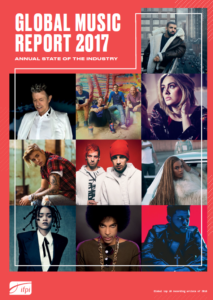


I was surprised to see David Bowie as number 2 in the Recording Artists list. He was always highly regarded, but did not have a ton of huge songs before his death. Most of his work seems to have been in the late 20th century (Heroes, Under Pressure, etc…). The reason he made the list in 2016 was, sadly, because of his death. The new song ‘Blackstar’ released just before his death!
http://variety.com/2017/music/news/drake-david-bowie-ifpi-best-selling-artists-2016-1201981538/
I, too, was shocked to see Bowie in the top 10. I always noticed that when an artist dies, they get more recognition or popularity. I understand it’s a part of “remembering” them and all, and this may be completely inappropriate, but an artist death is a great way to add money to their name. Michael Jackson is a excellent example. After he died, SOMEONE was still making money off of his merch or music sales, etc.
http://www.huffingtonpost.com/daniel-grant/is-an-artist-only-appreci_b_512932.html
https://www.forbes.com/sites/zackomalleygreenburg/2016/10/14/michael-jacksons-earnings-825-million-in-2016/#463695173d72
With the rise of streaming, people are buying less and less physical copies of music. I think its pretty interesting how Record Companies are adapting to this by offering more selective services based on the artist needs. Without having to worry so much about sales this helps to give artist more power and creative freedom. https://www.forbes.com/sites/cheriehu/2016/10/15/the-record-labels-of-the-future-are-already-here/#64fe4ed0872a
It’s amazing to see how fast streaming services have grown over the past couple of years. Reading this magazine made me realize just how big and important these companies are, especially since digital markets are becoming a bigger source of revenue as subscriptions continue to grow. Increasing the availability of these services increases their potential for success. However, as long as piracy and the value gap continue to be issues, the industry won’t fully recover. Currently, the industry is looking to change current legislation to make sites such as YouTube accountable for what their users upload. Much of the issue has to do with the Digital Millennium Copyright Act, which you can read about here from Indiana University’s Knowledge Base: https://kb.iu.edu/d/alik
Music is global, so it’s important to acknowledge people in different countries who are potential listeners/buyers and the different economies/cultures. I thought it was interesting to learn how Japan and Germany are still behind in streaming when compared to countries, such as the US and the UK, where streaming is the top source of revenue. In addition to Japan and Germany’s lack of familiarity with streaming, this link from NPR reveals that Japan has a love for collectibles and reinforces other topics from the Global Music Report.
http://www.npr.org/sections/therecord/2017/04/25/525571787/global-record-business-saw-sizable-growth-last-year-thanks-to-streaming
Although digital revenues have increased from last year to present, the value gap seems to be of highest priority to make sure artists are getting payed as they are being played. In current news, websites that function as “stream rippers” are shutting down due to copyright infringement lawsuits.
http://www.billboard.com/articles/business/7950158/youtube-mp3-shut-down-stream-ripping-site
While the report does discuss Asian markets, I found it odd that there was not one mention of the South Korean music industry. I was under the impression that South Korea had a major impact on the music industry, especially with K-Pop’s popularity in the U.S. and other areas in the world. I think perhaps it has something to do with relevance; other areas of the world offer more interesting discourse at this time. Honestly, seeing as it is at number 8 on the top ten global music industries list, I thought there would be even a small mention.
I decided to read upon South Korea’s place in the global market and it is pretty interesting. Here is the link to a nice read about the subject.
http://www.academia.edu/4732546/The_Globalization_of_K-pop_Koreas_Place_in_the_Global_Music_Industry
It was really astonishing to read about how the music industry has evolved in such ways that there are over 100 million people who have paid subscriptions to listen to their favorite artist. It’s crazy to believe that there is a 5.9% global recorded music market growth as of 2016 and to see that percentage go even higher in the next few years to come. As long as record companies are selling records and expanding their value, the music industry will always have a bright future.
https://www.theguardian.com/business/2017/apr/25/2016-marks-tipping-point-for-music-industry-with-revenues-of-15bn
In 2015 digital revenues over took physical formats as the main revenue maker for recorded music. Streaming services have contributed greatly to the switch to digital. But as music consumption is exploding around the world, the revenues are not being returned fairly to the actual creators and artists.
http://www.ifpi.org/news/The-value-gap-the-missing-beat-at-the-heart-of-our-industry
I agree with Sydnee, based on how the death of an artist truly makes their music popular and worth that much more. I was surprised to see Prince in the Top 10, but we know that it was due to his passing that it was made possible. Although he had numerous chart topping tracks previously it wasn’t until his death that he broke records again. One of the songs that had such a huge impact was Purple Rain, one of my favorites. Another thing I thought was pretty interesting was after reading a Forbes article it said, ” Once a full charting frame had gone by after his passing, the legendary musician’s albums took up a history-making 19 positions on the all-encompassing albums ranking. The week dated May 14th, 2016 is now very special in that Prince was in charge of almost 10% of all available slots, something that had never been done prior to this month. ” I thought that was really awesome especially for an artist that the younger generation isn’t very familiar with. It still got a lot of attention and topped the charts.
https://www.forbes.com/sites/hughmcintyre/2016/05/30/after-his-death-prince-broke-another-impressive-chart-record-that-didnt-get-much-attention/#2ec04a4a292e
http://variety.com/2016/biz/news/prince-dies-itunes-charts-1201758650/
You know looking at the different revenue streams for artists is pretty daunting. Digital sales are down as expected since nobody really buys music anymore. What i’m curious about is the revenue brought to artists through broadcasting sources like YouTube and Twitch.tv. Also, the reading mentioned in-app opportunities for revenue. This reminds me of Kanye Wests album T.L.O.P (The Life of Pablo) having advertisements popping up linking to Kanye’s merch line. Which mind you is very expensive. This helped the album go platinum super quickly since the only way you could purchase the exclusive shoes the Yeezy Boost 350 was through this link. https://www.theverge.com/2017/4/4/15180642/life-of-pablo-kanye-west-riaa-platinum-certification-streaming-only
The state of the music industry is growing rapidly. Countries like Africa and China have a huge impact on the future of the market. What I found interesting in this magazine was that apps like Spotify and TME (China) have millions of users. However, only a fraction of those actually pay for the app. The value gap affects most musicians because some artists do not get paid their money’s worth. Sites like YouTube affect apps like Spotify and TME because of the amount of users in YouTube outnumber the amount of people using these apps. YouTube does not generate even a fraction of the amount generated by these apps.
Here’s an article describing how the revenue on YouTube works.
http://videopower.org/how-many-views-to-make-money-on-youtube/
Its crazy how much the music industry has to adapt every generation/year and be up to date in order to keep the industry going. It is important to realize how hard these people work to keep everything working out in order to create profit. Actually, now, every type of industry has to keep up with the technology and they have to be constantly changing in order to survive.
https://musicindustryblog.wordpress.com/tag/global-music-sales/
It is obvious that today’s greatest consumer platform is in digital sales with Latin America alone showing 50% of the total market to be digital. With the number of different streaming sites, competition is high. I like the comment about competition not competing for the existing subscribers, but more so competing for the next 100 million. With the technology of today the audiences are so vast and these possibilities present artists with “the need to deliver their music to fans in ever more varied and exciting ways.”
Here is the growth of Spotify subscribers alone:
https://mattermark.com/tracking-spotifys-growth-40-million-subscribers/
It’s very interesting and encouraging to know major record labels are still very much involved in developing artists and their careers. I was under the impression this was no longer a popular practice. It’s good to hear from their point of view, as I usually hear from the disgruntled artists in the headlines. It is great to know they spend “27% of their revenue on Marketing and A&R alone. This is promising. Here’s an article that reflects what I usually see. Please excuse the foul language. https://noisey.vice.com/en_us/article/rj3zb6/are-major-labels-broken-azealia-banks-mia-childish-gambino-2014
Reading this article you really must think that people in the music industry are some of the most adaptable business people . While listening to music changes with the times, people in the music business find ways to still make money in the industry whether it be with companies such as spotify or apple music. While music is becoming more easy to not pay for and come by ; the music industry will always find away to make money.
Reading this article makes me think that some artist only make ranking because of their death Bowie shouldn’t have been in the top 10! The only reason for this is because of his death where other artist actually earn and work their way to the top! I feel like artist like Whitney Houston and Michael jackson worked for what they had alive and it was a remembrance when the died but what about the industry and the artist music sparks once they are dead?
http://www.huffingtonpost.com/daniel-grant/is-an-artist-only-appreci_b_512932.html
Reading this Global report shows how the music industry is changing at a fast pace in order to adapt. Whenever there is a trending artist or a fad going on in the music industry. I wonder how the music industry would continue to grow with many platforms to choose from and musicians can share their work without the need of a major record label.
How this was a wonderful read, I remember the lecture in class. Its amazing to me, (and dangerous) How the streaming revolution is like the digital one but unlike the digital one there isn’t the same monetary contribution. It was a great read,
http://www.billboard.com/articles/business/7775676/ifpi-global-music-report-2017-5-takeaways