It seems as if music criticism had abrasive critics of their own! I’m pleased that women were able to break the ceiling of being recognized, informative critics (especially in the rock genre), but it surprised me how long it took to achieve it. I’m disappointed that female music enthusiasts didn’t earn as much respect, compared to their male industry-related peers, until recently.
Music critics have a huge amount of influence over the consumer’s opinion and the artists reputation. More and more critics however, seem to be less involved in the musical content of the artist as far as technicality and musical ideals are concerned. The author in this link takes great concern to this arguing that even a “tiny dose of musical knowledge is apparently too much for modern-day media.”
This article talks about “pop” a lot, but they don’t necessarily mean what we consider pop today. In the “Popular” section, it alternates between ‘rock’ and ‘pop’ as if they were the same thing (which, I’ll admit, confused me). It seems as though it refers to the artist who has the highest rating and is popular at the time and what genre is popular according to the middle class. For example, the Beatles were popular, therefore rock was considered ‘pop.’ Today, pop is what Ariana Grande, Miley Cyrus, etc… are known for, which is a bit different from the Beatles. For more ways on how ‘pop’ music has changed, follow the link. https://www.thoughtco.com/what-is-pop-music-3246980
It’s surprising to learn how in the 2000’s, rock critics were only praising the legends from the past, while the poptimists were actually praising the current pop and hip hop artists. I am glad that music journalism has evolved from the old male writer biases and rock-only fanatics. However, this article from the Washington Post talks about how 2015 critics, from both rock and pop, are either praising the mega-pop stars writing bad songs and rock artists who are sticking to the same formula, instead of praising new creative artists who are unknown. It is ironic how some of the poptimists originally wanted to change the way pop music was criticized are now the ones who have only praised the mainstream pop artists even if they are writing bad songs.
The “rockism” vs. “poptimism” issue is older than I thought it was. It’s an argument that I think about a lot, since I used to be a big classic-rock-elitist type. I eventually realized that just because a song doesn’t accomplish anything new or say anything meaningful, it doesn’t mean it’s worthless. There’s still something to be said for execution; if it makes you dance or sing, it should still be valuable. To write off pop music as a whole would be a silly mistake. However, I still get contrarian itches to reject Top 40 hits because I feel like I’m being sold something I didn’t ask for. It feels impersonal, as if I should like something just because everyone else does or that because everyone likes it, there’s no question of its’ quality. Poptimism doesn’t seek to give pop music a free pass, but I can’t help but feel like it lowers the bar a bit too much. . . Guys, I might still be a bit of a rockist; I’m willing to change though! To read more about rockism and poptimism, here’s this: https://en.wikipedia.org/wiki/Rockism_and_poptimism
The fact that music journalism started out as far back as it did, and being so highly valued, blows my mind. Only someone who knew something about music could have wrote articles about music when the whole journalism process started. As time went on, more and more people could write about it, eventually opening it up to everyone, even though some people didn’t have the same open mindedness needed to properly assess an artist and their music or a specific critique due to their race or gender. None the less I enjoy seeing the doors continue to open and women being able to fight to do what they love to do and succeed and not be accused of falsifying everything they say.
In the article it states that music critics after the 1840’s were not practicing musicians themselves. In my opinion, if you are going to review and report on the music of someone else, you should at least have some sort of background knowledge on the music writing/performing process. It isn’t enough to just be a fan of music and want to tell everyone about who you’re listening to or what new music you’ve found. Also, you have to know the culture of the music and how the fan base acts. If you go to a heavy metal concert to write a review when you’ve only ever been to country concerts and don’t really listen to heavy metal, of course your review is not going to be as fair as it should be.
I think music criticism is quite a funny subject. I have the personal belief that someone’s taste in music is quite subjective, which is why I never bothered to look at music blogs. As a music fanatic myself, I listen to many different genres and sub-genres, and it isn’t appealing to me to hear someone describe a song based off of its “expressive power” or something of the like. I know I’d have a different idea of what “expressive” is. If I want to know if a song is good, I’d just listen to it.
However, that isn’t to say music criticism is worthless. People are very impressionable, and it’s not hard to believe that people would listen to an album if an influencer says it’s good.
I am still going to attempt to follow a music blog and see what it is actually like. The link is below.
The part where it is mentioned that critics sometimes don’t give artists credit for getting a felling across is interesting to me. It’s an idea that for the most part seems true even today in that it feels as if at times people focus too much on lyrics or technical proficiency and pay less attention to the vibe an artist tries to achieve. Take trap music for example, at times it seems as if the sub genre of hip hop is seen as lacking because of a perceived lack of thought provoking lyrics and yet the fact that this music represents the lifestyles many of these artists live/have lived is completely overlooked. http://www.npr.org/sections/therecord/2017/03/15/520133445/culture-wars-trap-innovation-atlanta-hip-hop
When it comes to music journalism it’s interesting to remember that music journalists controlled the popularity of music. Also because when I started thinking more about this topic while reading I started to realize that department seems kind of dead. In my opinion it doesn’t seem like anybody needs some journalist telling them whether something’s worth their time cause in order to get their opinion we’d have to go looking for it now whether it’s in a magazine and online. Realistically we depend on each other, family and friends. We typically start trending topics through Twitter and if we see many mutual friends are talking about a certain song or artist then we’re like “Hey let me check that out.” In a way we’ve become the journalists ourselves just in a more casual setting. It was also interesting to learn about the diversity of music journalists from the past. Considering we only depended on white males it makes me wonder what music could have been if someone else were judging it or if it wasn’t all one biased sub-group opinion. For more information for what’s currently going on is music journalism I looked up the current trending music journalist to follow on Twitter. These are people that either do it as their living or as a side hobby but have gotten popular off of it. It includes how many followers they currently have and what they generally talk about.
Some people take music criticism very seriously as it can both ruin and help an artist tenpin the public eye. That’s why most people are careful about what they do now. To me back in the early 1900s people didn’t really care they did what made them happy as an artist. Now artist are very selective when it comes to music due to the criticism they might get on their body of work. I found it very interesting that it was one base group that was judging the music not everyone so I started to think how much music would have changed if every race and sex were in on judging?
The very first time I actually understood music critics/ music journalist had an actual influence on whether or not people will listen and buy products from an artist is back when I was maybe in the 4th or 5th grade, when I was watching the Hannah Montana episode, “(We’re so sorry) Uncle Earl”. But after that, as I’ve gotten older, I started to understand that music journalism was kind of an important part of music sales.
If you get a top dog like Picth fork giving low ratings on an album, then you might have more people consciously thinking the album is bad once they listen to it.
But as the years go on, it seems as if music criticism is becoming a thing of the past. With more opportunities to write on blogs or post things online for free and for readers to read for free is a little more convenient. Making music critics an endangered group. Although, they once played a big part in music sales, I feel as if they no longer really have as much influence as they once did.
I really liked this article. I was actually surprised to learn that most music critics were not practicing musicians. What I found interesting was the critics of classical music and how it declined for awhile causing magazines to rid of their classical music critics. I would like to call myself a pretty big fan of classical music, both orchestral and opera. As I am familiar with how the classical world works, because it is its own world, I know how important critics can be. Often when there’s a new production of an opera or a new singer making their debut at a top opera house is the stories these critics are after and can often be the fate of that production or the career of that singer. Having followed the career of some of the great opera singers, they often mention how negative the public can be , especially the media. This begs me to hope that although these critics are not practicing musicians, that they really study and appreciate what goes in to singing and performing.
I believe that music journalism has grown into a more tangible and accessible outlet of information. From my understanding prior to the internet revolution music journalism only stemmed form a few magazines to word of mouth and public appearances on news and TV broadcast. With the emergence of the internet and artists being able to release information in a manner that suits them rather than labels makes todays music journalism culture completely different than before the internet take over.
I think music journalism is an essential part of the music industry. Music journalists represent a completely different side of the music industry that is so crucial to the success of some major artists today. While it is a very subjective art, reviews and constructive feedback can be really essential to the growth of an artist. I was watching an interview with Snoop Dogg and he mentioned while he made the music he wanted, he heard the critics when they said a record was or was not up to par. I have had a couple blog spots written about my music and can say while kind words are nice, it is the constructive feedback that holds the most value.
Most people have the ability to voice out their opinion on something and critique it. However, I personally feel like most of the people that critique have no idea or knowledge on what they are criticizing on. They are just critiquing just because they can. In the article, the writer mentions that some music critics fail to identify certain melodies and phrases of the song. If these critics, would comment on more of the music side of songs, then it would become a better critique of a piece. Some of these critics have no musical background or understanding of music theory.
Here’s a link of the Gun N’ Roses song, Get in the Ring, where Axl Rose talks directly about his critics.
The music industry has being innovating throughout the years and forms part of History. The most interesting part that I read here was that women were not taking in consideration in music history back in the day and they were the years that they were not able to vote or own anything and didn’t have many rights. It’s crazy how even in the music history, women’s rights have being changing and now one of the biggest artists is a women (Beyonce). http://www.huffingtonpost.com/stacie-huckeba/a-professionals-perspective-on-sexism-in-the-music-industry_b_10762200.html
Reading this article I think about the opinion and fact. If artist were to listen to the critiques of the industry some of the most successful music projects might not have ever come out. I speak on this because music journalism is very important but subjective. This article lets me know that music journalism is very important , but can be potentially detrimental. Kanye west was advised not to make his music , because he didn’t fit the hip hop culture , but the first album he produced for himself became one of the most influential rap albums of the decade. Music journalism has a very impactful part in the music industry , but sometimes it best to stray away from it’s perspective. http://www.ign.com/boards/threads/before-kanye-started-rapping-jay-z-told-him-not-to.453621601/
I have to agree with some of my classmates above. Pop music or Popular music isn’t what it was before. There were many critics when it came to Pop, but once the Beatles came in, that was the breakthrough even though they weren’t considered pop music. The Pop music we know today is way more popular and gets a lot more publicity. In the reading it says, “As more pop music critics began writing, this had the effect of “legitimating pop as an art form”; as a result, “newspaper coverage shifted towards pop as music rather than pop as social phenomenon.” Therefore, in my opinion before it was talking about how these artists and their pieces of art meaning their music. However, right now in our time it seems to be going back to more of a social aspect when it comes to artist and their music. There is so much going on that the media likes to take the artists music and their point of view on certain social movements, acts, relations, etc. and write about that. There are many artists that are using their music as a voice in order to spread awareness or get their message across that they want their fans to hear. Therefore, they use their art form “music”, to voice that opinion and the media relays or relates to it depending on the audience and can tend to criticize or uplift the artists message.
In the link below, it talks about artists regarding the LGBTQ+ community and how they relate, spread awareness, and have their voice heard on the specific issue at hand. The media can either view it in a positive or negative way, but they choose to let their voice be heard in such a way that relates to their fan. They are not only “popular music”, but they are also considered to be pop music.
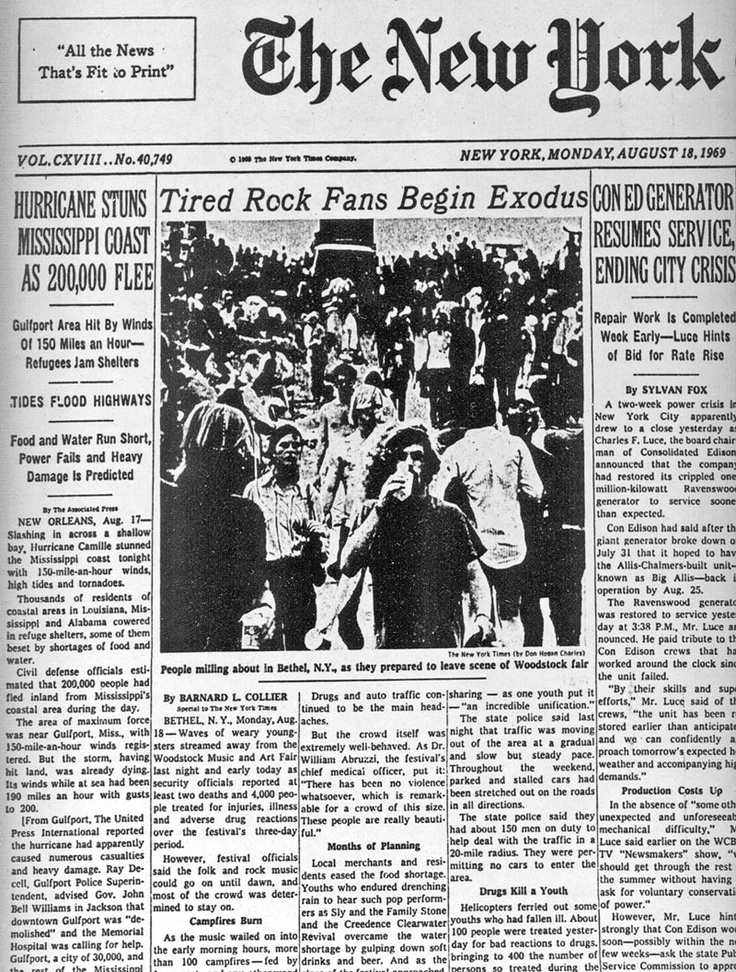

It seems as if music criticism had abrasive critics of their own! I’m pleased that women were able to break the ceiling of being recognized, informative critics (especially in the rock genre), but it surprised me how long it took to achieve it. I’m disappointed that female music enthusiasts didn’t earn as much respect, compared to their male industry-related peers, until recently.
More about women and criticism:
https://www.nytimes.com/2014/09/28/opinion/sunday/learning-to-love-criticism.html
Music critics have a huge amount of influence over the consumer’s opinion and the artists reputation. More and more critics however, seem to be less involved in the musical content of the artist as far as technicality and musical ideals are concerned. The author in this link takes great concern to this arguing that even a “tiny dose of musical knowledge is apparently too much for modern-day media.”
http://www.thedailybeast.com/music-criticism-has-degenerated-into-lifestyle-reporting
This article talks about “pop” a lot, but they don’t necessarily mean what we consider pop today. In the “Popular” section, it alternates between ‘rock’ and ‘pop’ as if they were the same thing (which, I’ll admit, confused me). It seems as though it refers to the artist who has the highest rating and is popular at the time and what genre is popular according to the middle class. For example, the Beatles were popular, therefore rock was considered ‘pop.’ Today, pop is what Ariana Grande, Miley Cyrus, etc… are known for, which is a bit different from the Beatles. For more ways on how ‘pop’ music has changed, follow the link. https://www.thoughtco.com/what-is-pop-music-3246980
It’s surprising to learn how in the 2000’s, rock critics were only praising the legends from the past, while the poptimists were actually praising the current pop and hip hop artists. I am glad that music journalism has evolved from the old male writer biases and rock-only fanatics. However, this article from the Washington Post talks about how 2015 critics, from both rock and pop, are either praising the mega-pop stars writing bad songs and rock artists who are sticking to the same formula, instead of praising new creative artists who are unknown. It is ironic how some of the poptimists originally wanted to change the way pop music was criticized are now the ones who have only praised the mainstream pop artists even if they are writing bad songs.
https://www.washingtonpost.com/entertainment/music/at-the-top-of-the-pop-music-heap-theres-no-criticizing-the-view/2015/04/16/d98d53a8-e1f2-11e4-b510-962fcfabc310_story.html?utm_term=.f902f2f9354c
The “rockism” vs. “poptimism” issue is older than I thought it was. It’s an argument that I think about a lot, since I used to be a big classic-rock-elitist type. I eventually realized that just because a song doesn’t accomplish anything new or say anything meaningful, it doesn’t mean it’s worthless. There’s still something to be said for execution; if it makes you dance or sing, it should still be valuable. To write off pop music as a whole would be a silly mistake. However, I still get contrarian itches to reject Top 40 hits because I feel like I’m being sold something I didn’t ask for. It feels impersonal, as if I should like something just because everyone else does or that because everyone likes it, there’s no question of its’ quality. Poptimism doesn’t seek to give pop music a free pass, but I can’t help but feel like it lowers the bar a bit too much. . . Guys, I might still be a bit of a rockist; I’m willing to change though! To read more about rockism and poptimism, here’s this: https://en.wikipedia.org/wiki/Rockism_and_poptimism
The fact that music journalism started out as far back as it did, and being so highly valued, blows my mind. Only someone who knew something about music could have wrote articles about music when the whole journalism process started. As time went on, more and more people could write about it, eventually opening it up to everyone, even though some people didn’t have the same open mindedness needed to properly assess an artist and their music or a specific critique due to their race or gender. None the less I enjoy seeing the doors continue to open and women being able to fight to do what they love to do and succeed and not be accused of falsifying everything they say.
https://www.newyorker.com/culture/cultural-comment/the-world-needs-female-rock-critics
In the article it states that music critics after the 1840’s were not practicing musicians themselves. In my opinion, if you are going to review and report on the music of someone else, you should at least have some sort of background knowledge on the music writing/performing process. It isn’t enough to just be a fan of music and want to tell everyone about who you’re listening to or what new music you’ve found. Also, you have to know the culture of the music and how the fan base acts. If you go to a heavy metal concert to write a review when you’ve only ever been to country concerts and don’t really listen to heavy metal, of course your review is not going to be as fair as it should be.
http://mhm.hud.ac.uk/MusicRadioHud/node/793
I think music criticism is quite a funny subject. I have the personal belief that someone’s taste in music is quite subjective, which is why I never bothered to look at music blogs. As a music fanatic myself, I listen to many different genres and sub-genres, and it isn’t appealing to me to hear someone describe a song based off of its “expressive power” or something of the like. I know I’d have a different idea of what “expressive” is. If I want to know if a song is good, I’d just listen to it.
However, that isn’t to say music criticism is worthless. People are very impressionable, and it’s not hard to believe that people would listen to an album if an influencer says it’s good.
I am still going to attempt to follow a music blog and see what it is actually like. The link is below.
http://www.stereogum.com/
The part where it is mentioned that critics sometimes don’t give artists credit for getting a felling across is interesting to me. It’s an idea that for the most part seems true even today in that it feels as if at times people focus too much on lyrics or technical proficiency and pay less attention to the vibe an artist tries to achieve. Take trap music for example, at times it seems as if the sub genre of hip hop is seen as lacking because of a perceived lack of thought provoking lyrics and yet the fact that this music represents the lifestyles many of these artists live/have lived is completely overlooked.
http://www.npr.org/sections/therecord/2017/03/15/520133445/culture-wars-trap-innovation-atlanta-hip-hop
When it comes to music journalism it’s interesting to remember that music journalists controlled the popularity of music. Also because when I started thinking more about this topic while reading I started to realize that department seems kind of dead. In my opinion it doesn’t seem like anybody needs some journalist telling them whether something’s worth their time cause in order to get their opinion we’d have to go looking for it now whether it’s in a magazine and online. Realistically we depend on each other, family and friends. We typically start trending topics through Twitter and if we see many mutual friends are talking about a certain song or artist then we’re like “Hey let me check that out.” In a way we’ve become the journalists ourselves just in a more casual setting. It was also interesting to learn about the diversity of music journalists from the past. Considering we only depended on white males it makes me wonder what music could have been if someone else were judging it or if it wasn’t all one biased sub-group opinion. For more information for what’s currently going on is music journalism I looked up the current trending music journalist to follow on Twitter. These are people that either do it as their living or as a side hobby but have gotten popular off of it. It includes how many followers they currently have and what they generally talk about.
http://www.complex.com/music/2011/08/25-must-follow-music-writers-on-twitter/3
Some people take music criticism very seriously as it can both ruin and help an artist tenpin the public eye. That’s why most people are careful about what they do now. To me back in the early 1900s people didn’t really care they did what made them happy as an artist. Now artist are very selective when it comes to music due to the criticism they might get on their body of work. I found it very interesting that it was one base group that was judging the music not everyone so I started to think how much music would have changed if every race and sex were in on judging?
http://mprcenter.org/review/silva-national-public-radio/
The very first time I actually understood music critics/ music journalist had an actual influence on whether or not people will listen and buy products from an artist is back when I was maybe in the 4th or 5th grade, when I was watching the Hannah Montana episode, “(We’re so sorry) Uncle Earl”. But after that, as I’ve gotten older, I started to understand that music journalism was kind of an important part of music sales.
If you get a top dog like Picth fork giving low ratings on an album, then you might have more people consciously thinking the album is bad once they listen to it.
But as the years go on, it seems as if music criticism is becoming a thing of the past. With more opportunities to write on blogs or post things online for free and for readers to read for free is a little more convenient. Making music critics an endangered group. Although, they once played a big part in music sales, I feel as if they no longer really have as much influence as they once did.
http://ajr.org/2014/11/13/music-critics-role-changing/
I really liked this article. I was actually surprised to learn that most music critics were not practicing musicians. What I found interesting was the critics of classical music and how it declined for awhile causing magazines to rid of their classical music critics. I would like to call myself a pretty big fan of classical music, both orchestral and opera. As I am familiar with how the classical world works, because it is its own world, I know how important critics can be. Often when there’s a new production of an opera or a new singer making their debut at a top opera house is the stories these critics are after and can often be the fate of that production or the career of that singer. Having followed the career of some of the great opera singers, they often mention how negative the public can be , especially the media. This begs me to hope that although these critics are not practicing musicians, that they really study and appreciate what goes in to singing and performing.
http://www.wqxr.org/story/newspapers-cut-critics-dark-time-dawn-new-age/
I believe that music journalism has grown into a more tangible and accessible outlet of information. From my understanding prior to the internet revolution music journalism only stemmed form a few magazines to word of mouth and public appearances on news and TV broadcast. With the emergence of the internet and artists being able to release information in a manner that suits them rather than labels makes todays music journalism culture completely different than before the internet take over.
https://www.imusiciandigital.com/en/will-music-journalism-survive-digital-age/
I think music journalism is an essential part of the music industry. Music journalists represent a completely different side of the music industry that is so crucial to the success of some major artists today. While it is a very subjective art, reviews and constructive feedback can be really essential to the growth of an artist. I was watching an interview with Snoop Dogg and he mentioned while he made the music he wanted, he heard the critics when they said a record was or was not up to par. I have had a couple blog spots written about my music and can say while kind words are nice, it is the constructive feedback that holds the most value.
http://tracksfordays.com/
Most people have the ability to voice out their opinion on something and critique it. However, I personally feel like most of the people that critique have no idea or knowledge on what they are criticizing on. They are just critiquing just because they can. In the article, the writer mentions that some music critics fail to identify certain melodies and phrases of the song. If these critics, would comment on more of the music side of songs, then it would become a better critique of a piece. Some of these critics have no musical background or understanding of music theory.
Here’s a link of the Gun N’ Roses song, Get in the Ring, where Axl Rose talks directly about his critics.
https://en.wikipedia.org/wiki/Get_in_the_Ring
The music industry has being innovating throughout the years and forms part of History. The most interesting part that I read here was that women were not taking in consideration in music history back in the day and they were the years that they were not able to vote or own anything and didn’t have many rights. It’s crazy how even in the music history, women’s rights have being changing and now one of the biggest artists is a women (Beyonce). http://www.huffingtonpost.com/stacie-huckeba/a-professionals-perspective-on-sexism-in-the-music-industry_b_10762200.html
Reading this article I think about the opinion and fact. If artist were to listen to the critiques of the industry some of the most successful music projects might not have ever come out. I speak on this because music journalism is very important but subjective. This article lets me know that music journalism is very important , but can be potentially detrimental. Kanye west was advised not to make his music , because he didn’t fit the hip hop culture , but the first album he produced for himself became one of the most influential rap albums of the decade. Music journalism has a very impactful part in the music industry , but sometimes it best to stray away from it’s perspective.
http://www.ign.com/boards/threads/before-kanye-started-rapping-jay-z-told-him-not-to.453621601/
I have to agree with some of my classmates above. Pop music or Popular music isn’t what it was before. There were many critics when it came to Pop, but once the Beatles came in, that was the breakthrough even though they weren’t considered pop music. The Pop music we know today is way more popular and gets a lot more publicity. In the reading it says, “As more pop music critics began writing, this had the effect of “legitimating pop as an art form”; as a result, “newspaper coverage shifted towards pop as music rather than pop as social phenomenon.” Therefore, in my opinion before it was talking about how these artists and their pieces of art meaning their music. However, right now in our time it seems to be going back to more of a social aspect when it comes to artist and their music. There is so much going on that the media likes to take the artists music and their point of view on certain social movements, acts, relations, etc. and write about that. There are many artists that are using their music as a voice in order to spread awareness or get their message across that they want their fans to hear. Therefore, they use their art form “music”, to voice that opinion and the media relays or relates to it depending on the audience and can tend to criticize or uplift the artists message.
In the link below, it talks about artists regarding the LGBTQ+ community and how they relate, spread awareness, and have their voice heard on the specific issue at hand. The media can either view it in a positive or negative way, but they choose to let their voice be heard in such a way that relates to their fan. They are not only “popular music”, but they are also considered to be pop music.
http://www.billboard.com/articles/list/513476/major-lgbt-music-moments
There’s always going to be a war of genres! I find it so fascinating how different things attract different people. I posted a link about this debate http://www.debate.org/opinions/which-is-better-rock-music-yes-or-pop-music-no
There are a vast amount of musical journalist and bloggers, But its about politics when you are a published journalist. You have places that are taken seriously and others perceptions could be to be considers as music bloggers which is something different.
https://www.google.com/url?sa=t&rct=j&q=&esrc=s&source=web&cd=1&cad=rja&uact=8&ved=0ahUKEwi8x6TIxLrXAhVKyoMKHbhkAi0QFggoMAA&url=https%3A%2F%2Fwww.careersinmusic.com%2Fmusic-journalist%2F&usg=AOvVaw1AaqAYeSW5OBTq4rZntw_g